Simple ways to cut your grocery bill without eating worse
A little planning, flexible ingredients and a closer look at price labels can help you make more of your grocery budget while keeping meals enjoyable.
In this guide
Eating well on a grocery budget doesn’t have to mean cooking every meal from scratch or giving up the foods your household enjoys. Start with a few habits that fit your routine: check what you have, make a flexible plan and use more of what you buy.
You don’t need to try everything at once. Pick one or two ideas below and adjust them to your household’s tastes, schedule and dietary needs.
Plan meals around what you already have
Before making a shopping list, take a quick look in the fridge, freezer and cupboards. Note ingredients you’d like to use soon, along with anything you already have enough of. Planning around those ingredients can help reduce unnecessary purchases and food waste.
Choose a few dinners rather than planning every bite. If you have rice, frozen vegetables and eggs, for example, put a rice bowl on the menu. A tin of beans and a jar of tomatoes could become the starting point for a soup or a topping for baked potatoes.
Leave room for a busy night or a change of plans. Keep a short list of easy meals your household likes, such as omelets, pasta with vegetables or beans on toast. A flexible plan is easier to return to than one that depends on cooking something new every day.
Shop with a list and compare unit prices
Once you’ve chosen a few meals, list the ingredients you need. Group the list by store section if that makes shopping easier, or keep a shared list on your phone so other household members can add items as they run out.
At the shelf, compare the unit price as well as the total price. The unit price tells you the cost for a standard amount, such as an ounce or a pound, so you can compare packages of different sizes. Check that the labels use the same unit before comparing.
A larger package isn’t automatically the best choice for your household. Consider whether you have room to store it and will use it. If a smaller size suits you better, it may be the more practical purchase even when its unit price is higher.
Consider store brands and pantry staples
Store-brand foods can be worth comparing with familiar name brands. Look at the unit price, ingredients and nutrition information, then decide whether the product suits your needs. Research cited in the supplied sources notes that store brands are often less expensive, although the difference varies.
Try one item at a time rather than replacing everything at once. If your family likes a store-brand oatmeal or pasta, add it to your usual list. If not, try a different option next time.
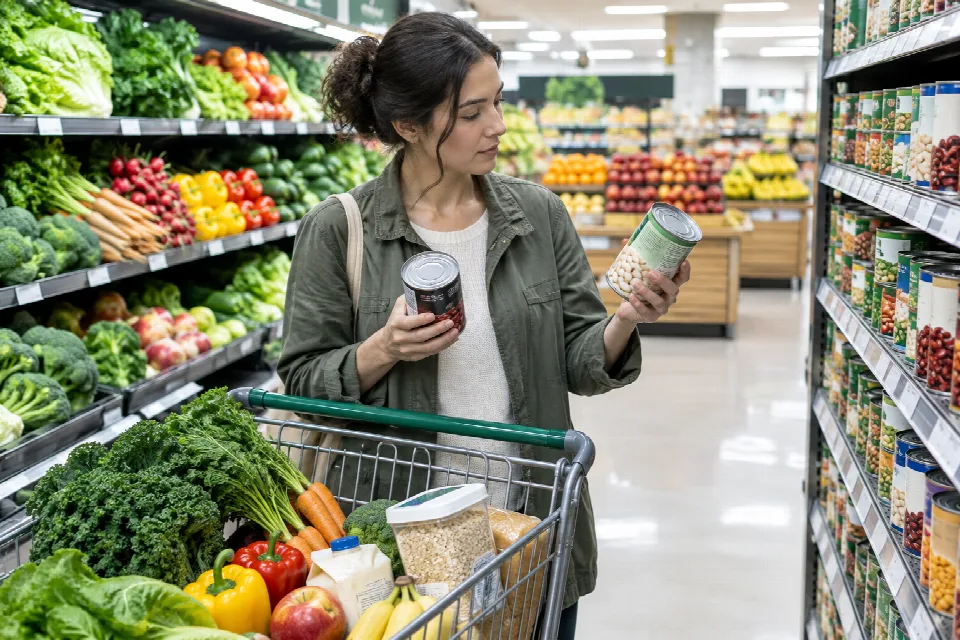
A small supply of versatile staples can also make meal planning simpler. Rice, oats, pasta, canned tomatoes, beans and lentils can be mixed with fresh or frozen ingredients. Buy the staples you actually enjoy, in quantities that fit your storage space and cooking habits.
Explore frozen, canned and seasonal produce
Fresh produce is only one option. Frozen fruits and vegetables can be nutritionally comparable to fresh, and they let you take out what you need for a meal. Canned produce can also be useful to keep on hand. Compare labels and choose options that suit your preferences and dietary needs.
Try frozen berries with oatmeal, frozen vegetables in a stir-fry or canned tomatoes in a sauce. For fresh produce, see what’s in season and compare prices. Build meals around the options that look appealing and work for your budget, rather than feeling tied to a particular recipe.
If you prefer fresh vegetables but find that some go unused, buy a smaller amount and supplement it with frozen or canned choices. The goal is a mix that you’ll enjoy and can realistically use.
Try meals with beans, lentils or eggs
Beans and lentils offer plant-based protein, and eggs are another option for a simple meal. You don’t have to give up meat: try using beans alongside it, or choose one meat-free dinner that appeals to your household.
For a gentle start, add beans to chili, lentils to a tomato sauce or eggs to a vegetable-and-rice bowl. A baked potato topped with beans and vegetables is another flexible choice. Use seasonings your family already likes, and adjust portions to suit the people at your table.
Make use of leftovers and freeze extras
Think of leftovers as ingredients for another meal. Extra vegetables can go into soup or an omelet; cooked rice can become the base of a bowl; and leftover beans can fill a wrap. Planning to use extras can help reduce food waste.
When it works for you, make an extra portion and freeze it for a busy day. Label the container with the contents and date, and follow food-safety guidance for storing, freezing and reheating. Keep a short note of what’s in the freezer so it gets included in future meal plans.
The most useful approach is one you can keep up. Start by checking your cupboards before your next shop or planning one meal around leftovers. Then build from there.
Sources
- www.eatingwell.com · /best-grocery-budget-tips-11688884
- finance.yahoo.com · /personal-finance/banking/article/how-to-save-money-on-groceries-ways-stretch-food-budget-214426031.html
- www.moneytalksnews.com · /slideshows/smart-ways-to-shrink-your-grocery-bill-without-sacrificing-nutrition
- www.realsimple.com · /how-to-eat-healthy-on-a-budget-12115761
- www.healthline.com · /nutrition/lower-grocery-bill-inflation
- www.littlepotatoes.com · /blog/10-ways-to-spend-less-at-the-grocery-store
- www.healthline.com · /nutrition/fresh-vs-frozen-fruit-and-vegetables